Why Cleaning Your Tweezers Matters More Than You Think

Most people reach for their tweezers every single day — for ingrown hair removal, eyebrow shaping, eyelash extension work, or splinter extraction — yet very few ever stop to clean them properly. This is one of the most overlooked beauty habits, and it carries real consequences.
Unwashed tweezers accumulate layers of skin debris, natural oils, dead cells, bacteria, and product residue with every single use. When those contaminated tips touch open pores, freshly plucked follicles, or broken skin, they create a direct pathway for infection, folliculitis (inflamed hair follicles), and even scarring.
Beyond hygiene, dirty tweezers perform worse. Residue build-up on the tips reduces grip, causes slipping, and can permanently damage the precision alignment that makes a quality tweezer work. Regular cleaning is not just about safety — it protects your investment.
A 60-second clean after every use can prevent infections, preserve tip sharpness, and double the lifespan of your tweezers.
How Often Should You Clean Your Tweezers?
| Usage Type | Recommended Cleaning Frequency |
|---|---|
| Personal daily use (home) | After every single use |
| Salon / professional use | Between every client — no exceptions |
| Occasional home use | Before and after each use |
| Tweezers in storage | Wipe with alcohol before first use after storage |
| Shared household tweezers | Before and after each person uses them |
What You Need to Clean Tweezers at Home
- Rubbing alcohol — 70% isopropyl or higher (the gold standard for sterilization)
- Cotton balls or pads (soft and lint-free)
- Mild dish soap or antibacterial hand soap
- Warm running water
- Clean dry cloth or paper towel
- Small bowl or glass (optional — for soaking)
- Old soft toothbrush (for deep cleaning the grip area)
Step-by-Step: How to Clean Tweezers Properly
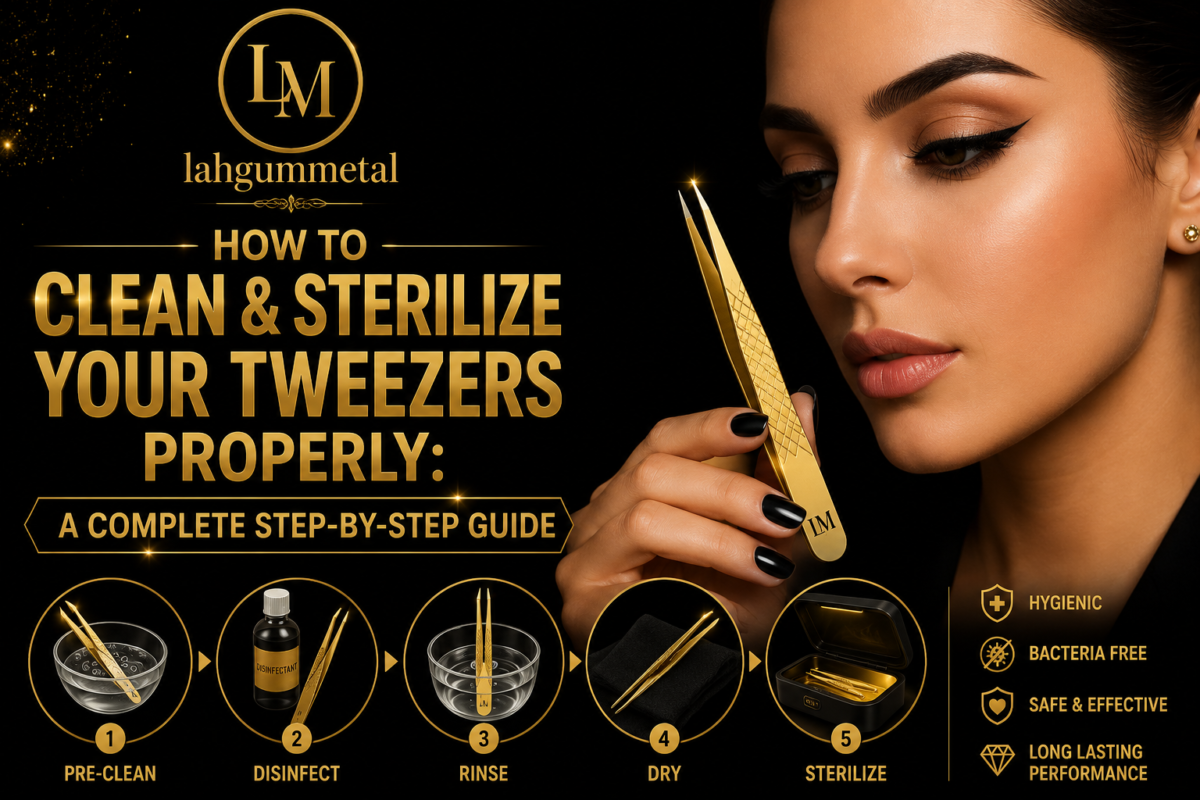
Step 1 — Rinse Under Warm Water
Hold your tweezers under warm (not boiling) running water for 30 seconds. This loosens and removes visible debris, skin cells, wax residue, and any product build-up on the tips and body. Open and close the tips gently while rinsing to flush out any trapped particles in the hinge area.
Step 2 — Wash with Mild Soap
Apply a small drop of mild dish soap or antibacterial soap to the tweezers. Use your fingers or a soft toothbrush to scrub all surfaces — especially the inner grip ridges and the area just behind the tips where debris collects most. This step removes oils, wax, and dried skin cells that water alone cannot shift.
Step 3 — Rinse Thoroughly
Rinse under warm water until all soap residue is completely gone. This is important: even small amounts of leftover soap can react with the metal over time, dulling the finish and weakening the tip alignment. A thorough rinse takes only 20–30 seconds.
Step 4 — Sterilize with Rubbing Alcohol
Soak a cotton pad generously with 70% isopropyl alcohol and wipe down all surfaces of the tweezers — the tips, the body, and the inner grip area. Pay extra attention to the very tips, as these make direct contact with the skin. For eyelash extension tweezers or tools used in professional settings, allow the tweezers to soak in alcohol solution for 5–10 minutes for complete disinfection.
Step 5 — Air Dry Completely Before Storing
This step is critical and most people skip it. Never put tweezers away while they are still wet. Even premium stainless steel can develop surface rust when stored with moisture trapped in the hinge or tip area. Lay them on a clean, dry cloth or paper towel with the tips open and allow them to air dry for at least 5 minutes before storing.
Professional Sterilization Methods (Salon & Clinic Use)
Autoclave Sterilization — The Gold Standard
An autoclave uses high-pressure saturated steam at 121–134°C to kill all forms of microbial life including bacteria, viruses, fungi, and spores. This is the method used in medical facilities and high-end salons. If you use tweezers professionally — particularly for eyelash extension work or ingrown hair treatments — investing in a small autoclave is strongly recommended. LahGum Metal precision tweezers are made from medical-grade stainless steel that is fully autoclave-safe.
UV Sterilizer Cabinet
UV sterilizer cabinets use ultraviolet light to kill surface bacteria and viruses on tools. They are widely used in nail salons, lash studios, and beauty clinics. UV sterilizers are fast (10–20 minutes), easy to use, and ideal for daily maintenance between deeper alcohol or autoclave cleans. They are particularly popular for manicure and cuticle tools that need frequent turnaround between clients.
Chemical Disinfectant (Barbicide or EPA-Registered Solution)
Barbicide and similar EPA-registered disinfectant solutions are industry standards in salons. Immerse tweezers fully in the diluted solution for the time specified on the packaging (typically 10 minutes). This method is effective against bacteria, fungi, and many viruses. Rinse with clean water afterward and dry completely before use or storage.
Alcohol Soak (Quick Professional Method)
For fast turnaround between clients, place tweezers in a small glass of 70% isopropyl alcohol for 10 minutes. Remove, shake gently, and air dry on a clean towel. This is the most practical method for high-volume salon use when an autoclave is not immediately available.
How to Remove Rust from Stainless Steel Tweezers
Even the best stainless steel tweezers can develop surface rust if regularly stored wet, kept in humid bathroom environments, or exposed to chlorinated water. Surface rust does not mean the tool is ruined — here is how to fix it:
- Make a baking soda paste — mix equal parts baking soda and water until it forms a thick paste
- Apply to the rusted area — use a cotton swab or old toothbrush to coat the affected spots
- Leave for 10–15 minutes — allow the paste to work on the oxidation
- Scrub gently — use the toothbrush in small circular motions, applying light pressure
- Rinse thoroughly — wash away all paste residue under warm running water
- Dry immediately and completely — do not leave any moisture behind
- Apply a light coat of mineral oil — this creates a protective barrier against future rust and keeps the hinge smooth
Proper Tweezers Storage Tips
- Use a protective case or roll pouch — never toss tweezers loose into a makeup bag where tip contact with other metal items will cause damage and dull the alignment
- Cover the tips — tip guards or small rubber caps prevent contamination and protect the ultra-sharp points of needle nose tweezers
- Avoid bathroom open shelves — steam from showers creates a humid environment that accelerates rust and bacteria growth
- Store tips-up in a holder or cup — if you do not have a case, store tweezers upright with tips facing up so they are not resting on the precision ends
- Keep away from direct sunlight — UV light can affect some coatings over time
- Separate by use — do not store your chin hair tweezers with your eyelash tools; dedicated tools stay cleaner and last longer
Signs Your Tweezers Need Replacing
Even with perfect cleaning habits, tweezers have a lifespan. Look for these signs that it is time for a new pair:
- Tips no longer meet precisely — even a fraction of a millimetre misalignment causes slipping and missed grips
- Visible pitting or deep rust that cannot be removed with baking soda treatment
- The spring tension has weakened — if tweezers feel floppy or do not spring back, they cannot grip effectively
- Tips have become blunt — needle-point tweezers should have a perfectly sharp point; a rounded or chipped tip is a safety risk for ingrown hair removal
Which LahGum Metal Tweezers Are Best for Daily Sterilization?
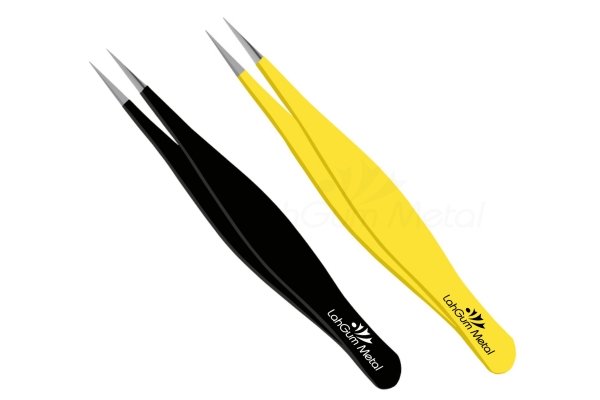
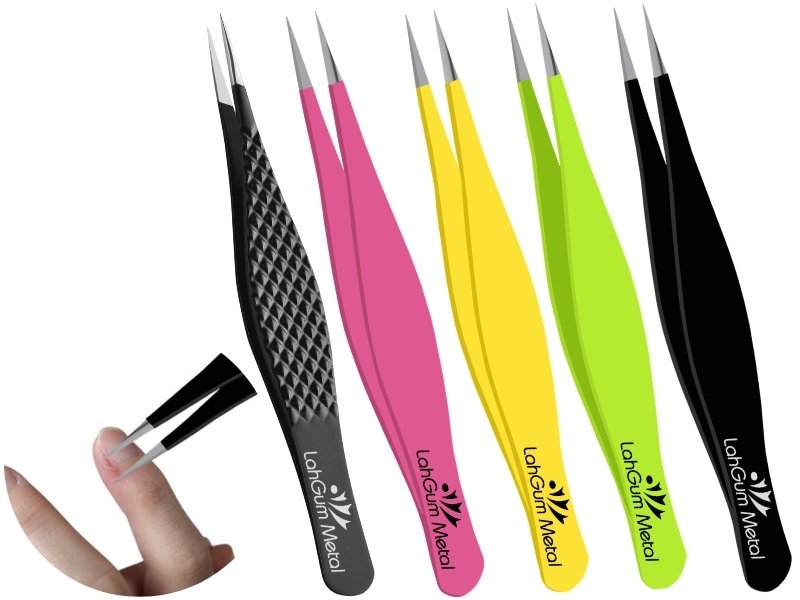
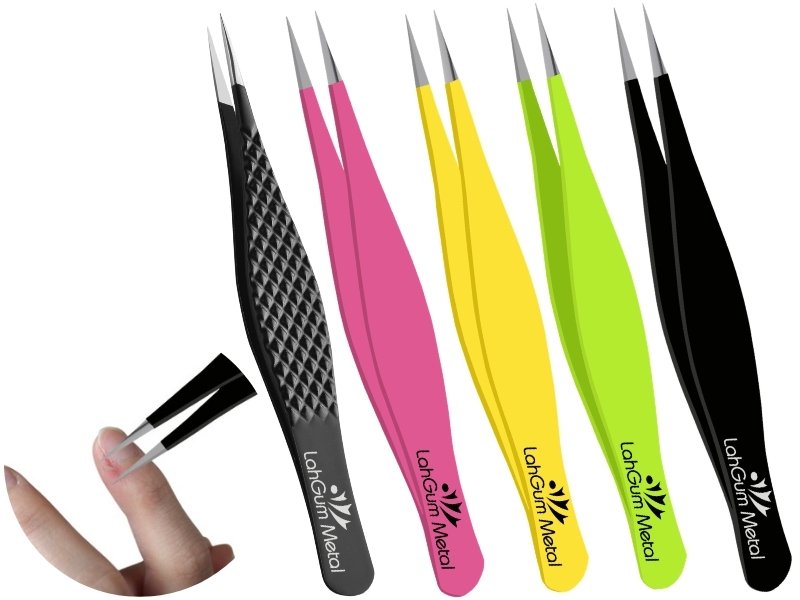
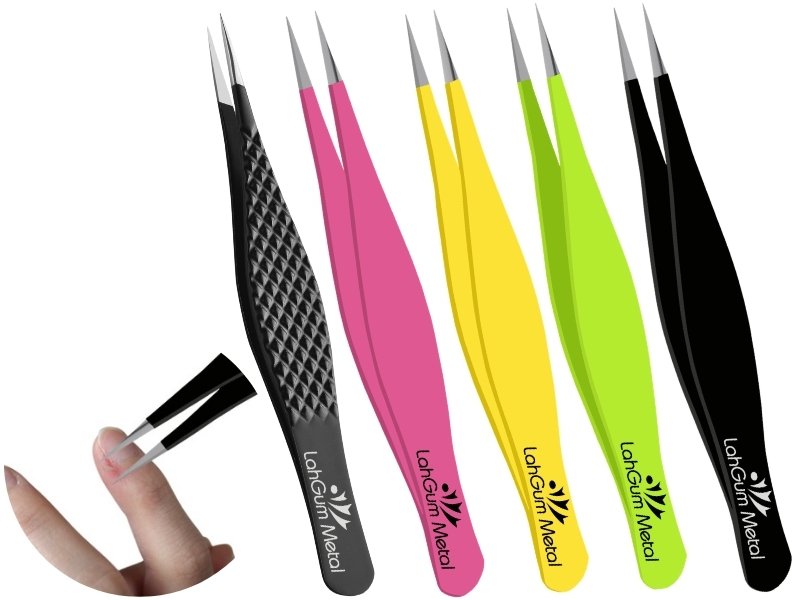
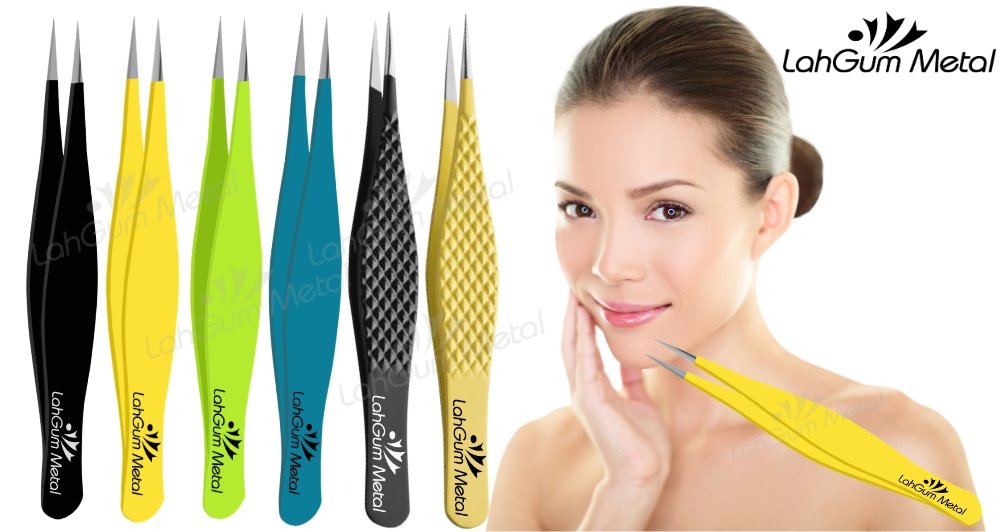
All LahGum Metal tweezers are crafted from premium surgical-grade stainless steel — rust-resistant, non-porous, and fully compatible with alcohol, autoclave, and UV sterilization methods. Here are the top picks for both home and professional use:
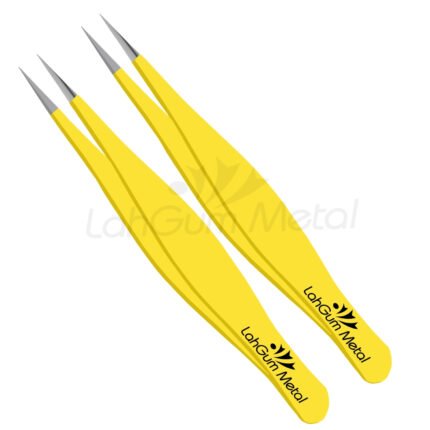
Chin Hair Tweezers for Men & Women
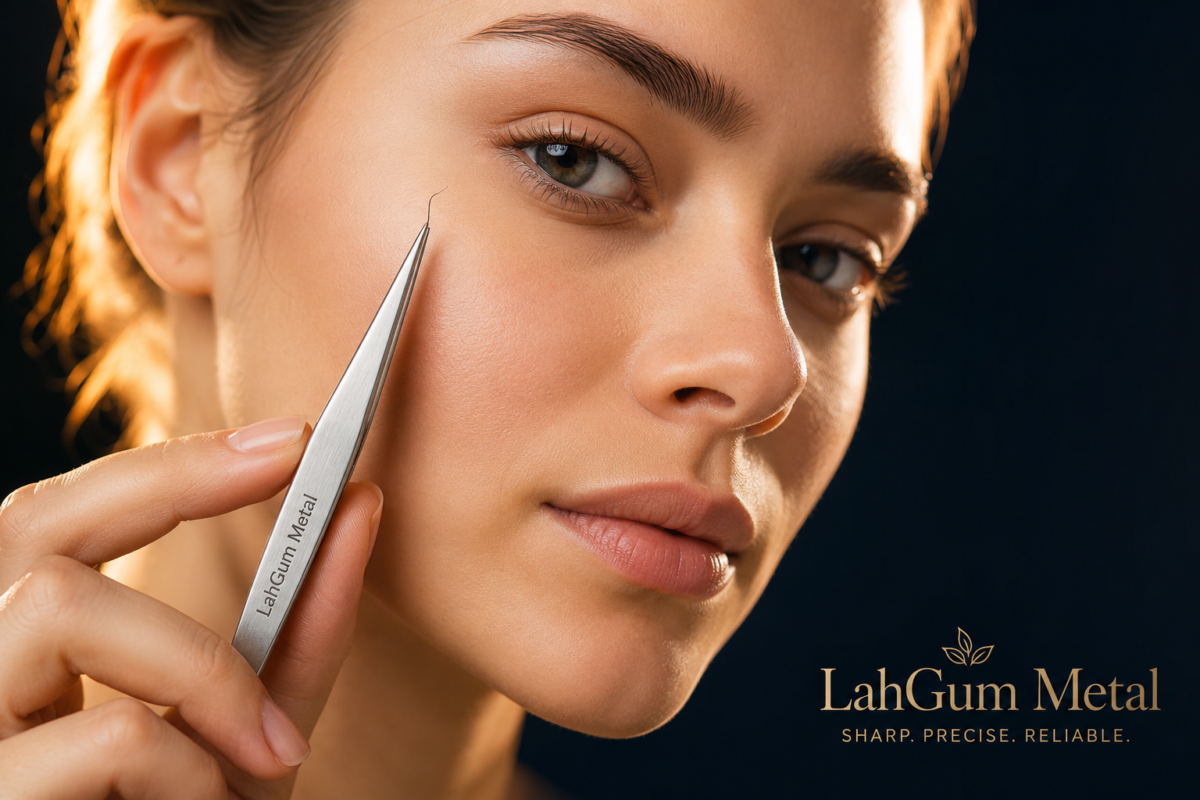
Precision-engineered needle tip for grabbing even the finest chin hair and facial stubble. Smooth stainless steel body sterilizes in seconds. Perfect for daily home use and quick alcohol wipe-down between sessions.
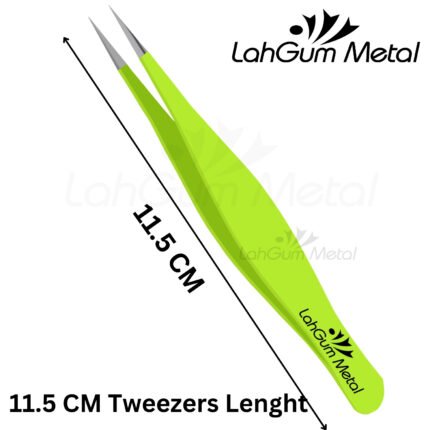
Best Needle Nose Tweezers — Fine & Facial Hair
Ultra-thin needle nose tip grabs the finest fine facial hair, ingrown hairs, and splinters with zero skin trauma. Medical-grade steel means a 10-second alcohol wipe is all the sterilization needed.
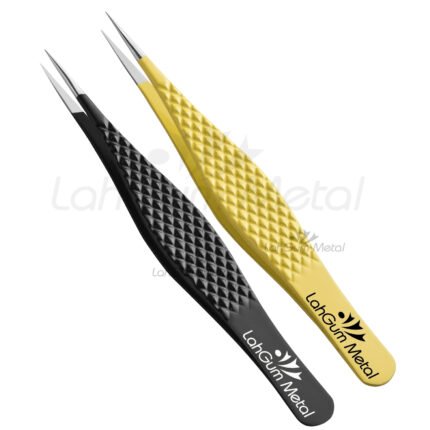
Surgical Precision Tweezers — Medical Grade
The professional’s choice. Made from surgical-grade stainless steel with needle point precision. Fully autoclave-safe and designed to withstand daily professional sterilization cycles without tip degradation.
Common Cleaning Mistakes to Avoid
- Storing tweezers wet — the single most common cause of rust and bacterial growth
- Using alcohol below 70% — concentrations under 70% are not effective for proper sterilization
- Wiping tips with a dirty cloth — you re-contaminate the surface immediately; always use fresh cotton pads
- Using bleach — chlorine bleach corrodes stainless steel, damages the tip alignment, and leaves a chemical residue that is harmful if it contacts skin
- Skipping sterilization between users — even within the same household, sharing tweezers without sterilizing transfers bacteria and potentially viruses
- Leaving tweezers in a wet bathroom — even if not wet themselves, prolonged exposure to steam and humidity causes gradual surface oxidation
- Boiling stainless steel tweezers — while boiling kills bacteria, rapid thermal cycling can warp the spring tension and damage tip alignment on precision tools
Frequently Asked Questions
Can I put my tweezers in the dishwasher?
Not recommended. The high heat and harsh detergents in a dishwasher can warp tip alignment, dull precision points, and cause spotting on the metal. Hand cleaning with soap and alcohol sterilization is always the better method for quality tweezers.
How do I know if my tweezers are fully sterilized?
After a 70% isopropyl alcohol wipe-down or 10-minute soak, your tweezers are considered disinfected for home use. For medical-grade sterilization (killing all spores), only an autoclave achieves true sterilization. For home use, alcohol disinfection is more than sufficient.
Can I use hand sanitizer instead of rubbing alcohol?
Hand sanitizer contains alcohol but also includes gels, moisturizers, and other ingredients that can leave residue on metal tips. Stick to pure 70% isopropyl rubbing alcohol for the most effective and residue-free clean.
Do LahGum Metal tweezers rust?
LahGum Metal tweezers are made from premium stainless steel which is highly resistant to rust under normal conditions. However, prolonged exposure to moisture (especially when stored wet), chlorinated water, or saltwater can cause surface oxidation. Following the cleaning and storage guide above ensures they stay rust-free for years.
Final Verdict
Clean tweezers are not just about hygiene — they perform better, last significantly longer, and protect your skin from unnecessary infection risk. Whether you use tweezers for chin hair, rely on fine hair removal tweezers daily, or depend on needle point tweezers professionally, a proper cleaning routine takes 60 seconds and pays off every single time.
All LahGum Metal precision tools are built from surgical-grade stainless steel — designed to be cleaned, sterilized, and used again and again without performance loss.
👉 Browse the Full LahGum Metal Precision Collection